

I am delighted to interview Rosalind Davis a practicing artist, writer, lecturer, elective member of AIR Artists Advisory Group, and co-director of Core Gallery.
Core Gallery launched in April 2010 with the experimental curatorial exhibition 'Exquisite Corpse' since then it has continued to thrive into a dynamic and innovative space for contemporary arts and has worked with around 100 emerging and established, international and UK artists and curators.
In this interview we look to the past and survey Core Gallery’s 2010 highlights, we find out the commitment and work that goes into sustaining a gallery. I get a peek into this year’s exciting programme and discuss the cultural relevance of artist run spaces.
 |
| 8,000 Souls Part II, Oil and embroidery on cotton, 60 x 40 cm, 2009 © Rosalind Davis |
Rosalind Davis is a graduate from the RCA (2005) and Chelsea College of Art (2003) She has exhibited her work nationally and internationally.
Davis also has a blog on Artist’s talking on visual arts directory a-n (www.a-n.co.uk) which has received much acclaim, winning one of 2009’s blog of the year. It was also selected by Matt Roberts (Matt Roberts Arts) as a choice blog of the month in July 2009.
Davis also has a blog on Artist’s talking on visual arts directory a-n (www.a-n.co.uk) which has received much acclaim, winning one of 2009’s blog of the year. It was also selected by Matt Roberts (Matt Roberts Arts) as a choice blog of the month in July 2009.
February 2011>>
CP: Can you tell us about Core Gallery’s ethos and how this is unique within Deptford’s art community?
RD: Core Gallery invites curators into the space to explore their practices, they are free to develop ideas and bring in artists that they feel will fit; they work without limitations as much as possible. We in return do our utmost to promote and facilitate their shows, connecting them with other artists, spaces and opportunities wherever possible.
The Deptford Arts community is a very exciting one and each space has its uniqueness and our colleagues here have been very warm and inviting, if it had not been for such a rich artistic landscape here then it is unlikely we would have set up the gallery – we felt we would like to contribute somehow and in turn create something exciting in an underused space which would also feed into our studio artist’s practice and nurture networks.
Here are two very good quotes from 2 curators we worked with at Core in 2010 which does better than I in expressing what Core is about:
“One of the few truly eclectic contemporary art spaces in London, Core Gallery's first year of exhibitions and events has been diverse, thought provoking and substantial.
As a writer/curator Core Gallery has provided me with the space, the support and the network to develop my ideas, try out new things and showcase new and emerging artists. Core Gallery is proving to be a vital addition to the South East London art community.”
Andrew Bryant
“Working with Core Gallery is an energising and inspiring experience for me as a curator. It embodies many of the most positive aspects of artist led spaces, acting as a platform for risk taking, experimentation and diversity of practice with real commitment to and engagement with the development of the local arts ecology”
Nick Kaplony
“One of the few truly eclectic contemporary art spaces in London, Core Gallery's first year of exhibitions and events has been diverse, thought provoking and substantial.
As a writer/curator Core Gallery has provided me with the space, the support and the network to develop my ideas, try out new things and showcase new and emerging artists. Core Gallery is proving to be a vital addition to the South East London art community.”
Andrew Bryant
“Working with Core Gallery is an energising and inspiring experience for me as a curator. It embodies many of the most positive aspects of artist led spaces, acting as a platform for risk taking, experimentation and diversity of practice with real commitment to and engagement with the development of the local arts ecology”
Nick Kaplony
 |
| Artist Talk: The Eighteenth Emergency, 2010 © Core Gallery |
CP: William Morris declared in his 1884 lecture ‘Art & Socialism’ that: “Association instead of competition, social order instead of individualist anarchy” were the ways to free creativity and return it to the working man. How pertinent would you say that this statement is today? What associations have arisen from the conception of Core Gallery?
RD: I believe through sharing knowledge and working together we can only strengthen artists roles and improve our situations. Association is better than competition, that way you can build a community from which you can nurture and sustain yourself, your career and others.
At Core we have also set something of a new precedent in terms of our associate members, who are not actually in the studio space itself but contribute significantly to the space such as Jane Boyer and yourself and the artists who contribute to the space or education programme.
I spent 5 years pursuing my own career (and still do) after leaving RCA and it was time to expand myself through the expansion of my own practice through the gallery and it is something I find very fulfilling and rewards me tenfold. Running the gallery and the hard work we do inspires generosity from others in a mutually beneficial way.
At Core we have also set something of a new precedent in terms of our associate members, who are not actually in the studio space itself but contribute significantly to the space such as Jane Boyer and yourself and the artists who contribute to the space or education programme.
I spent 5 years pursuing my own career (and still do) after leaving RCA and it was time to expand myself through the expansion of my own practice through the gallery and it is something I find very fulfilling and rewards me tenfold. Running the gallery and the hard work we do inspires generosity from others in a mutually beneficial way.
 |
| JooHee Hwang, Installation View, Sisyphus exhibition © Core Gallery |
CP: The programme last year promoted an experimental approach to exhibition-making and placed a strong focus on curatorial concepts. How do you plan to maintain that this year?
RD: This year our exhibition programme is going to continue to be experimental, focusing a little closer to home with myself, Elizabeth Murton and Jane Boyer all curating exhibitions rather than just having guest curators.
Two shows I shall be curating this year: one with Jane Boyer of our DX winners ‘Extra-Ordinary’ in April and an exhibition called ‘Home’ with Annabel Tilley in October. With home, we are exploring this theme in the widest sense of the word- a place of fragility, transition and identity from a cross generation of artists. Artists so far for this project include Graham Crowley, Delaine Le Bas, Rich White, Freddie Robins, Peter Davis, Kate Murdoch, Rose Wylie, Lucy Austin, Emily Speed myself and Annabel Tilley.
 |
| 64 almost-identical drawings of Josef Fritzl blindfolded © 2009 Annabel Tilley |
I am finding the process of curating a very interesting, analytical, critical and exploratory role. I am testing new muscles and learning an awful lot. Also working in partnership is something I very much enjoy, the debate, the conversations which lead you to interesting new paths. It is a delight.
We are also delighted to invite back Nicholas Kaplony and Andrew Bryant and we are very excited to be working with Coexist, a dynamic artist led space in Southend in a collaborative project with our studio members that will tour from Coexist to Core at the end of 2011.
CP: In Jane Boyer’s interview I asked; “What do you think the key is to creating a sustainable artist-run space?” Jane answered, “co-operation… honesty, integrity, trust, sharing, responsibility, communication.” What other strategies are also key to a gallery’s survival and what will you be implementing this year?
RD: I concur with Jane, she has pretty much nailed it: Strong shows, an awareness of the need to be accessible, to be good at promotion and marketing.
Last year we had 11 shows, 3x open studios, 1 community workshop, loads of art talks and it was rather overwhelming and not exactly sustainable (somehow we managed it) so this year we are having less shows and already have our 2011 programme sorted and so it is more manageable for me – so I would say also that balance is also key.
I would conclude in saying that generosity is part of the backbone of what we are doing here, to artists and curators who work with the space and they are equally generous and supportive of us so I think that is part of the success of artist led spaces. I think artists like the freedom of not working with a commercial gallery- it’s a very nurturing way of working, you don’t just feel like a commodity and that is essential and empowering for artists to feel their integrity is being respected and uncompromised.
RD: I concur with Jane, she has pretty much nailed it: Strong shows, an awareness of the need to be accessible, to be good at promotion and marketing.
Last year we had 11 shows, 3x open studios, 1 community workshop, loads of art talks and it was rather overwhelming and not exactly sustainable (somehow we managed it) so this year we are having less shows and already have our 2011 programme sorted and so it is more manageable for me – so I would say also that balance is also key.
I would conclude in saying that generosity is part of the backbone of what we are doing here, to artists and curators who work with the space and they are equally generous and supportive of us so I think that is part of the success of artist led spaces. I think artists like the freedom of not working with a commercial gallery- it’s a very nurturing way of working, you don’t just feel like a commodity and that is essential and empowering for artists to feel their integrity is being respected and uncompromised.
CP: In an AIR interview with Jack Hutchinson you stated that: “In art education there should be compulsory professional practice for artists, which is essential if new graduates wish to survive in the art world and even get a sense of their newly qualified direction. It is a wilderness out there and you need to do your research.” How important are internships for new graduates? Can you describe the internship programme you have established and how it has added to the dynamics of the gallery?
RD: I think the internship programme is very important. I value my interns highly and seek to harness their strengths and push them to learn and follow projects that they are passionate about. I have three interns at the moment- Jo who has been with us for about 6 months and helps deal with audience development, Jasvinder who has been sorting and jazzing up our website and creating some fantastic graphics for printed materials.
Charlie Norwood is also joining the gallery team (previously at Goldsmiths) and is going to be undertaking some art writing for the space- critiquing shows or possibly writing essays to accompany the exhibitions which will be a wonderful addition.
Without them, our studio artists and our associate members, core gallery would not exist. They in turn are great supporters of the space. I am very pleased to say that one of our interns has gone onto do a curatorial internship at the Tate.
I think part of the role of the gallery is about good practice and we pass this onto our interns. Core, at every level, gives people room to manage their own projects – such as these wonderful Core Gallery interviews which again increases our profile, is a fantastic educational tool and also contributes to your own career.
RD: I think the internship programme is very important. I value my interns highly and seek to harness their strengths and push them to learn and follow projects that they are passionate about. I have three interns at the moment- Jo who has been with us for about 6 months and helps deal with audience development, Jasvinder who has been sorting and jazzing up our website and creating some fantastic graphics for printed materials.
Charlie Norwood is also joining the gallery team (previously at Goldsmiths) and is going to be undertaking some art writing for the space- critiquing shows or possibly writing essays to accompany the exhibitions which will be a wonderful addition.
Without them, our studio artists and our associate members, core gallery would not exist. They in turn are great supporters of the space. I am very pleased to say that one of our interns has gone onto do a curatorial internship at the Tate.
I think part of the role of the gallery is about good practice and we pass this onto our interns. Core, at every level, gives people room to manage their own projects – such as these wonderful Core Gallery interviews which again increases our profile, is a fantastic educational tool and also contributes to your own career.
 |
| The Eighteenth Emergency: Exhibition shot, 2010 © Core Gallery |
CP: Core Gallery’s is re-launching this year with a show in February curated by Andrew Bryant? What can we expect from this show?
RD: This is the second time Core shall be working with Andrew Bryant: his first show the Eighteenth Emergency was a very intelligent experimental show which I really enjoyed and learned from and I know we can expect something similar this year.
I cannot divulge too much more than that about the exhibition at this stage except that the show is going to be exploring the use of technology and within art.
The artists are: Jim Prevett, Niklas Tafra, Chad Burt, Daniel Lichtman, Ciarán Ó Dochartaigh and Adrianna Palazzolo all of whom studied or are studying at Goldsmiths. The work I have heard about so far has sounded compelling, amusing, strong in concept and execution.
I cannot divulge too much more than that about the exhibition at this stage except that the show is going to be exploring the use of technology and within art.
The artists are: Jim Prevett, Niklas Tafra, Chad Burt, Daniel Lichtman, Ciarán Ó Dochartaigh and Adrianna Palazzolo all of whom studied or are studying at Goldsmiths. The work I have heard about so far has sounded compelling, amusing, strong in concept and execution.
 |
| The Eighteenth Emergency: Exhibition shot, 2010 © Core Gallery |
CP: A question that is frequently recurrent and is the title of a recent symposium held at Whitechapel is: Art: what is the use? Speaking on behalf of an active artist and gallery director, in your opinion what is art’s use? Any why more than ever is this question crucial?
RD: Artists are incredible. What the general public don’t understand about artists is that they are talented, not just at the art bit. Practising artists know that this is not the only thing we have to do: out of necessity one has to do your own marketing, research and development, manage people, projects, understand law and legal frameworks, create business plans, business development, marketing strategies, organize and manage finance, pr, network endlessly, be adept at negotiation and writing funding applications, leading and managing people, audience development, collector development, education, teaching, professional practice, social engagement and politics. Surviving rejection, funding cuts, knockbacks to name but a few things.....
Out of the desire to survive and sustain and to nurture we learn countless skills: we are analytical, thoughtful, empathetic, compassionate, passionate, philosophical and aware of countless issues.
We draw on a range of skills, experiences, cultures. We are endlessly creative. We are endlessly self educating, self critical, self directive. We challenge ourselves endlessly, we adapt and we try over and over. That takes courage, it all does.
The creative sector works damn hard at being everything we need to be to survive and you know what, we are pretty talented at all this plus the actual making. We need to be recognised and valued further for our contributions to this world. Don’t forget artists are needed, and should be appreciated.
Out of the desire to survive and sustain and to nurture we learn countless skills: we are analytical, thoughtful, empathetic, compassionate, passionate, philosophical and aware of countless issues.
We draw on a range of skills, experiences, cultures. We are endlessly creative. We are endlessly self educating, self critical, self directive. We challenge ourselves endlessly, we adapt and we try over and over. That takes courage, it all does.
The creative sector works damn hard at being everything we need to be to survive and you know what, we are pretty talented at all this plus the actual making. We need to be recognised and valued further for our contributions to this world. Don’t forget artists are needed, and should be appreciated.
 |
| Alyson Helyer, Marion Michell, Tom Butler |
CP: Can you tell us about the much anticipated show that is with 2010’s Deptford X Open competition winners; Alyson Helyer, Marion Michell and Tom Butler?
RD: The exhibition is called Extra-Ordinary and will be at the end of April. Jane Boyer and I shall be curating this exhibition and the three artist’s works are going to create a very intelligent show exploring the transformation, subversion and distortion of the normal and everyday into something Extra Ordinary.
The title of the show also reflects the fact that these artists were selected ultimately from over 250 artists and have great promise.
At the moment we are pulling together the curatorial themes and the next thing shall be to visit the artists studios and select works for the show / discuss new possibilities.
Tom who lives and works in America at present is coming to London to be here during the exhibition which is a great bonus too.
The title of the show also reflects the fact that these artists were selected ultimately from over 250 artists and have great promise.
At the moment we are pulling together the curatorial themes and the next thing shall be to visit the artists studios and select works for the show / discuss new possibilities.
Tom who lives and works in America at present is coming to London to be here during the exhibition which is a great bonus too.
 |
| Deptford X Open Competition, 2010 © Core Gallery |
CP: You have a blog (Becoming Part of Something). That followed the emergence and development of Core Gallery. Can you tell us how this has been useful to profiling the gallery and gaining a larger audience?
RD: Extremely useful! A blog opens up opportunities for dialogue with artists, curators and many others. The blog is quite unique in the sense that there aren’t many blogs about running a gallery space. It is often about ones own practice so it gives an interesting insight into the amount of work a gallery can do and demonstrates the integrity of our space which then also brings in supporters amongst the artistic and wider community who are now contributing to the space in one way or another. I had not quite expected such a thing, such generosity!
I am as well as others very grateful about the artists talking platform on a-n, it is such a fantastic platform for critical engagement.
One of the most important developments through the blog was the involvement of Jane Boyer as an associate member of Core who has been incredible in the helping of the running of the gallery since Autumn last year.
To expand as well: the support we get from other artists due to the blog is down to the honesty of it I think. The practical challenges. I have a genuine passion for artists and I am constantly fascinated by their practices- I celebrate those things through my blog. At times as well I demonstrate my sheer exhaustion! I think it’s important to be realistic about the challenges artists face and the difficulties of juggling my own practice and my many different roles as artist, teacher, writer, gallery manager, project coordinator and now AIR advisory member.
I also had a letter published in a-n about the workings of an open submission as it is fairly controversial issue amongst artists- (where does the money go to, how is this justified etc) explaining how much work open submissions can take. We have a huge responsibility to the artists we work with to get things right and to change the way artists are treated for the better.
We shall actually be discussing the usefulness of blogs at a future Nuts and Bolts Workshop as part of DIY Educate partnered with a-n.
CP: You were recently elected to the AIR Artists Advisory Group, how do you plan on fulfilling this role and representing and campaigning for artist’s causes?
RD: It was an incredible accolade to be nominated to AIR, to be part of a group that shall contribute an insightful, balanced, representative view on current issues faced by the creative sector, to engage others in a proactive manner with the aim of helping and tackling challenges to achieve the goals faced within the creative sector.
I think that we need to collectively create change in current Government policies, public opinion, employment, galleries etc. Education as well is a hugely important issue for me. Part of my election agenda was as follows and so I hope in the 4 years that I shall be on the AIR council that I shall have been able to contribute towards these goals I have set myself.
 |
| Air Event, 2010 © Core Gallery |
- Helping artists directly by providing them with tools which can enable them to navigate and maximise their impact on the art world while avoiding the pitfalls.
- Facilitating the development of its members by growing the artist community and representation of artists within cultural institutions.
- Creating a structured educational programme of artists’ talks to educate others from our own experiences and giving beneficial advice to advance artist’s careers.
- Promoting the interests of AIR members by effectively building key relationships and ensuring the interests and views of artists are understood and acted upon.
- Developing the arts by building networks of artists and institutions either directly or indirectly facilitating creative partnerships and arts events.
- Increase our visibility and emphasising our strengths as a culturally important sector to the public so that we can gain more support for our issues.
- Helping to Empower Artists as a group not only within the commercial world of galleries but also the wider cultural strata, to be considered as important as any other social commentator working for example alongside government.
CP: Core Gallery has already received a considerable amount of support from its Cor Blimey studio members, associate members, invited artists and curators, but how can people become more involved in supporting the gallery?
RD: We are looking for patrons, sponsors, supporters on every level! We definitely need more financial support as we have no funding to run the gallery and there is an opportunity for people to contribute with a donation, or to purchase a core gallery chair which is giving an important resource to the space and is a very manageable £10.
 In addition we are very open to people being involved in the space whether it be; helping mount or take down a show, invigilating, flyering etc! A little help can go a long way! Just get in touch, see our support pages or buy a chair!
We are also happy to have the joining of a new associate gallery member Becky Hunter, an artist, art critic and writer who is going to be looking after our press side of things. Basically the door is always open and people can contribute by just coming and enjoying the shows and passing our info onto others.
All our DIY educators are supporting the space which enables us to provide something even more to our audience and community.
CP: As well maintaining a full exhibition programme Core Gallery facilitates and runs an education programme: DIY Educate. Can you outline what this entails?
RD: We are looking for patrons, sponsors, supporters on every level! We definitely need more financial support as we have no funding to run the gallery and there is an opportunity for people to contribute with a donation, or to purchase a core gallery chair which is giving an important resource to the space and is a very manageable £10.
 In addition we are very open to people being involved in the space whether it be; helping mount or take down a show, invigilating, flyering etc! A little help can go a long way! Just get in touch, see our support pages or buy a chair!
 We are also happy to have the joining of a new associate gallery member Becky Hunter, an artist, art critic and writer who is going to be looking after our press side of things. Basically the door is always open and people can contribute by just coming and enjoying the shows and passing our info onto others.
All our DIY educators are supporting the space which enables us to provide something even more to our audience and community.
CP: As well maintaining a full exhibition programme Core Gallery facilitates and runs an education programme: DIY Educate. Can you outline what this entails?
RD: DIY Educate is a contemporary education programme run by artists, curators and other art professionals to encourage artistic development for those seeking to further their career in art.
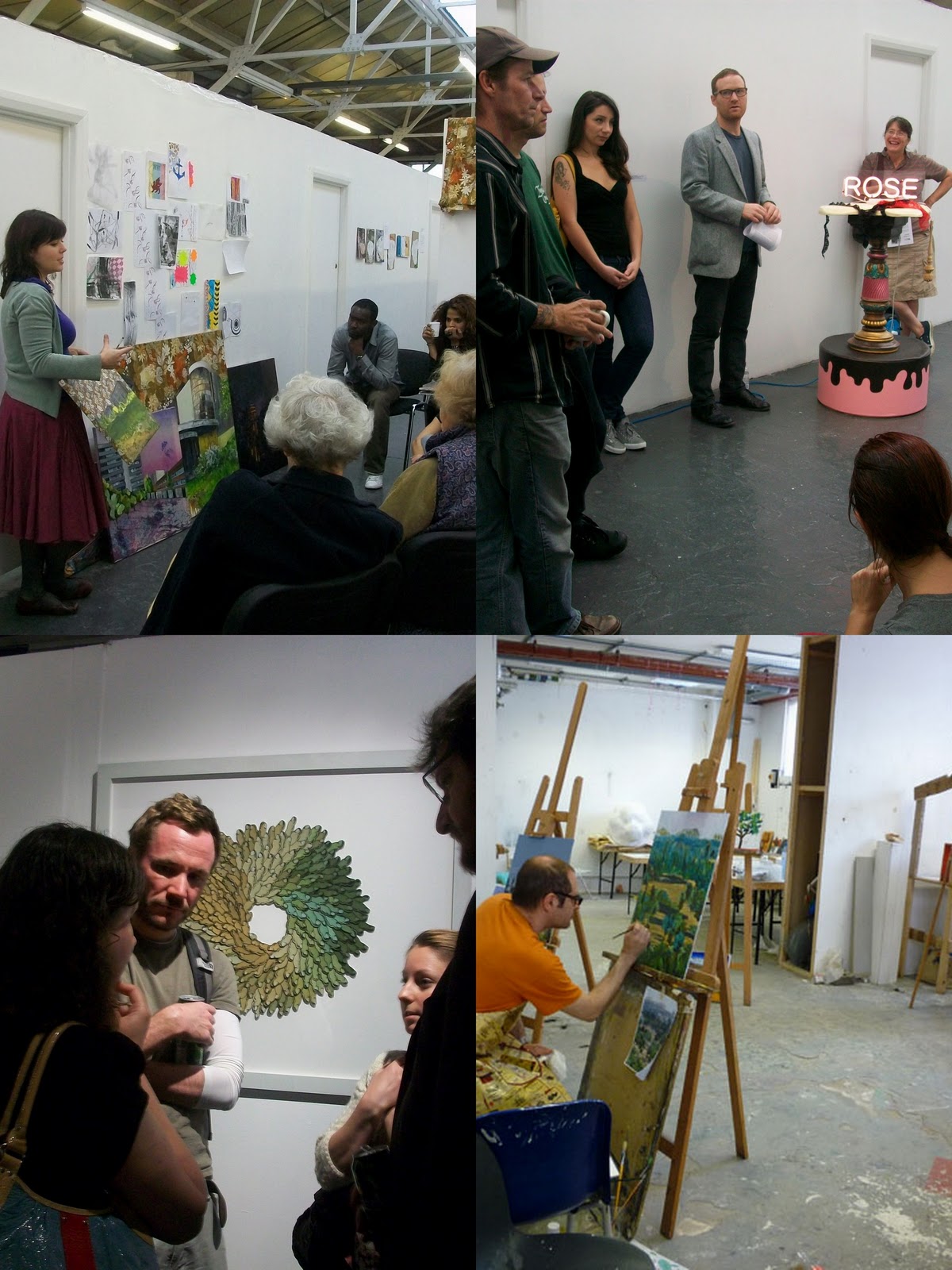
From peer-led and one to one critiques, professional practice workshops as well as a number of artist’s and curator lectures, DIY Educate provides opportunities to learn, network, share ideas and knowledge, providing impetus for artists to develop their practice. DIY Educate also gives practical guides and resources to help artists survive in an unstable and competitive climate, making the most of their skills. How to get work, how to get paid, how to maintain your career- artists have to do it all for themselves constantly and it is a lot to navigate. It is also the real stuff about surviving, the nitty gritty, that we can all feel disappointed and rejected at times but having worked with many artists and students and the last year at Core we saw there was a real need for artists at all levels (and not just when you first graduate) people can get isolated in their practice, be unaware of how best to push themselves whether creatively or even publicly. Another thing is that the London Art scene is huge, we are creating a nurturing pocket for those who may have just moved to London, giving them an opportunity to tap into a rather huge network.
 |
| Artist Talk: Psychometry exhibition © Core Gallery |
CP: In your recent blog you give a rundown of the highs and lows of 2010. Can you describe briefly the highlights and the challenges you have faced. Also what can we look forward to in 2011’s exhibition programme?
RD: I think everything to do with the gallery has been a challenge but a rewarding one. I have been stretched– particularly intellectually. The skills I have gained, the amazing artists and curators I have met, that is beyond measure.
Having never run a gallery before I am proud of all that we collectively achieved and this year we have more support structures in place and even more support than we started out, so I feel very positive about 2011.
The challenges I think will often be the same challenges: trying to find a balance, trying to do everything I can in the time I have, finances…… but we will just get better at this more.
Having never run a gallery before I am proud of all that we collectively achieved and this year we have more support structures in place and even more support than we started out, so I feel very positive about 2011.
The challenges I think will often be the same challenges: trying to find a balance, trying to do everything I can in the time I have, finances…… but we will just get better at this more.
CP: If you could write a Core Gallery manifesto for 2011, on behalf of the arts collective, what would it entail?
RD: Really simple things which is not exactly a manifesto but is how I hope that we can all be:
RD: Really simple things which is not exactly a manifesto but is how I hope that we can all be:
- Be generous
- Maintain your integrity
- Be respectful and generous to others
- Nurture art and artists
- Pull your weight
- Explore ideas
- Do not limit yourself or others- be open, seek to understand, to educate yourselves and others.
- Professionalism
- Say thank you (and please)
- Remember that people are not perfect so try not to throw stones.
CP: Is there any news or projects that we haven’t discussed that you would like to divulge?
RD: I have just started working with Matt Roberts as his exhibition manager which is very exciting. I shall be assisting specifically with the Salon photo prize, the Salon video Prize and Julie Cockburns solo show at Matt Roberts as well as working on the catalogues. Matt is an example of someone who is extremely professional, friendly and extremely generous and a very intelligent curator. He has been a great mentor to me and Core Gallery and I am really thrilled about learning more from him and being involved in another fantastic space.
I have also been asked to be on the judging panel for the University of the Arts, Xhibit 2011, which is UAL’s most prestigious annual student exhibition, now in its 14th year. The central aim of Xhibit is to showcase high quality student work from across the numerous colleges of the university, ranging from painting and photography to film, fashion, sculpture, and beyond. The exhibition is expected to reflect the diversity of talent within the university. It is an unexpected honour to be asked.
I have also been asked to be on the judging panel for the University of the Arts, Xhibit 2011, which is UAL’s most prestigious annual student exhibition, now in its 14th year. The central aim of Xhibit is to showcase high quality student work from across the numerous colleges of the university, ranging from painting and photography to film, fashion, sculpture, and beyond. The exhibition is expected to reflect the diversity of talent within the university. It is an unexpected honour to be asked.
CP: Thankyou very much Rosalind


